Blue Ridge Hearing and Balance Clinic
The Ear Experts Since 1982

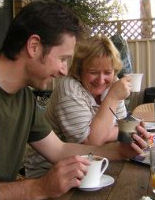 Do you know someone with hearing problems?
We all do, but we are not always sure how to help them. Hearing loss is an invisible but devastating disability. The onset is usually gradual, and is usually first noticed by friends and family before the person with the hearing loss recognizes the problem. As noted by the Better Hearing Institute: “When someone in the family has a hearing problem, the entire family has a hearing problem.”
What are the consequences of hearing loss?
Studies have shown that untreated hearing loss leads to: irritability, anger, fatigue, depression, withdrawal and isolation from others, loneliness, reduced alertness, impaired memory, reduced job performance, reduced earning power, and early dementia. Sometimes, untreated hearing loss is mistaken for dementia or Alzheimer’s disease. Keep in mind that as we age, we typically become less physically active, so our eyes and ears are our connection to the world. Good vision and hearing are more important in the elderly, and hearing loss should not be accepted as an inevitable part of aging.
What can you do?
A recent Consumer Reports article says the single most important step in effectively dealing with hearing loss is to find the most qualified professional to help you, and strongly recommends seeking out a practice where Ear, Nose and Throat (ENT) physicians, audiologists and hearing aid specialists work together. This combination of specialists can make sure you are getting the best treatment. Going directly to a hearing aid specialist could mean that all treatment options are not explained or made available since most hearing aid retailers offer only one treatment, hearing aids.
Why choose Blue Ridge Hearing and Balance Clinic?
We are the only practice in the Princeton and Bluefield, West Virginia area where ENT physicians, Doctors of Audiology, and hearing aid specialists work together. We have been in the community since 1982, and will be here for you when you need follow up care. We perform live speech mapping on every hearing aid fit. This is the only way to assure hearing aids are giving the best possible sound.
What if we have tried hearing aids without success?
Unfortunately, this is not an uncommon concern. We believe that the skills of a Doctor of Audiology and the techniques and products our team offers are necessary to achieve success with hearing aids, and many hearing aid retailers do not have the training and tools necessary. We encourage anyone that has not achieved good success with hearing aids to schedule a consultation. We can quickly determine if the hearing aids are set correctly.
How expensive are hearing aids?
There are many types and levels of technology available, and the prices vary widely. There is not one hearing aid that is right for everyone. Someone with a quiet lifestyle wishing to be able to hear a one on one conversation does not need the same level of technology or expense as someone with an active lifestyle wishing to hear optimally in a variety of settings. Hearing aid prices can range from a low of several hundred dollars to a high of a few thousand dollars each. Over 90% of hearing aids fit in our office are between $1200 and $2450 each. We will work to find the best option for your lifestyle and budget.